

Salvia Hot Lips A Colourful Pollinator Friendly Garden Favourite

Some plants earn their place by working hard without making a fuss. Salvia ‘Hot Lips’ is one of them. It flowers for months, brings a playful splash of red and white to the garden, and draws in bees, butterflies and other pollinators when the border needs life and movement.
This small shrubby salvia has become a favourite in sunny gardens for good reason. It suits borders, gravel gardens, cottage-style planting, wildlife-friendly spaces and large pots. Once settled, it asks for very little beyond sunshine, sharp drainage and a simple yearly prune.
If you have an awkward gap in a sunny border, or a patio pot that needs colour for more than a few weeks, Salvia ‘Hot Lips’ is a plant worth knowing.
Why Salvia Hot Lips is such a useful garden plant
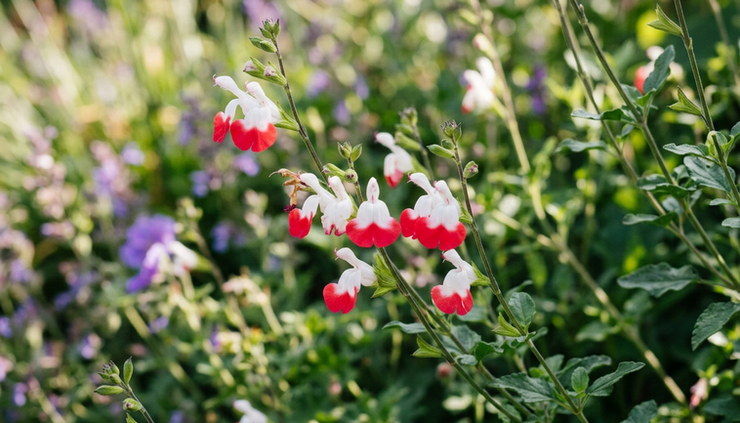
Salvia ‘Hot Lips’ has a light, airy shape that makes it easy to slot into a garden without overwhelming nearby plants. It usually forms a loose mound of small green leaves and upright flowering stems. The flowers are small, but there are plenty of them, and the plant keeps producing more over a long season.
The colour is the part most people notice first. Each bloom can be red and white, all red, or sometimes mostly white. Temperature and growing conditions can affect how the flowers look, which adds to the charm. On one plant, you may see several colour variations at once.
That mix of colour makes it especially good for linking other plants together. The white tones sit well with silver foliage, grasses and pale flowers. The red picks up warm colours in dahlias, geums, crocosmia and roses. It gives a border a cheerful lift without looking too heavy.
Salvia ‘Hot Lips’ also has a relaxed habit. It does not need staking in most gardens, and it often looks better when allowed to keep its natural shape. The fine stems move gently in the breeze, softening harder edges around paths, patios and raised beds.
It is particularly useful because it solves a common garden problem: how to fill a sunny space with colour that lasts. Bedding plants can look tired after a short burst. Some perennials flower beautifully, then disappear into the background. Salvia ‘Hot Lips’ keeps going for a much longer stretch, especially when grown in the right place.
For anyone wondering What to grow in sunny border and attract the polinators, this is a strong answer. It gives colour, texture and wildlife value in one easy plant.
Where to plant Salvia Hot Lips for the best results
Salvia ‘Hot Lips’ needs sun. A bright, open position helps it flower well and keeps the growth sturdy. It will cope with a little light shade, especially in the hottest part of the day, but too much shade often leads to fewer flowers and floppy stems.
The other key is drainage. This salvia dislikes sitting in cold, wet soil through winter. In much of the UK, winter wet causes more trouble than winter cold. If the roots stay waterlogged, the plant may struggle or fail.
A good spot has:
Plenty of direct sun
Free-draining soil
Shelter from harsh, cold winds
Space for air to move around the plant
No long periods of standing water
If the soil is heavy clay, improve the planting area before adding the salvia. Mix in garden compost and grit to open the soil structure. Better still, plant it slightly raised, so water drains away from the crown. A raised bed, slope or gravel border can suit it very well.
In a pot, use a peat-free compost mixed with grit or perlite to improve drainage. Make sure the container has proper drainage holes. A pot that holds water at the base is not suitable, even if the top layer looks dry.
Salvia ‘Hot Lips’ is also a good choice near a seating area. The flowers are pretty up close, pollinators visit often, and the foliage has a pleasant aromatic quality when brushed. It brings a gentle sense of life to patios and paths without demanding constant care.

How Salvia Hot Lips supports bees, butterflies and garden life
A good wildlife plant does not need to be wild-looking or difficult to manage. Salvia ‘Hot Lips’ proves that. Its tubular flowers are attractive to many pollinating insects, especially bees. Butterflies may also visit during warm spells, along with other beneficial insects that move through the garden.
The long flowering season matters. Pollinators need food across as much of the year as possible, not just during one short flush. Salvia ‘Hot Lips’ can help bridge gaps between other flowering plants. In a mixed border, it adds a reliable nectar stop while other plants come and go.
This makes it a useful plant for wildlife-friendly gardening in both town and country spaces. A single potted plant will not transform a whole garden, but it still helps. Several plants, combined with other long-flowering perennials and shrubs, create a much stronger food source.
Good companion plants include:
Lavender for summer flowers and fragrance
Verbena bonariensis for height and airy purple blooms
Nepeta for soft blue flowers and a relaxed edge
Echinacea for late-summer colour
Sedum for autumn nectar
Ornamental grasses for movement and winter structure
Rosemary or thyme in dry, sunny spots
Together, these plants build a border that looks good and feeds insects over a long period. They also share similar growing needs: sun, drainage and not too much fuss.
One more benefit is that salvias are often less attractive to slugs and snails than many softer-leaved plants. No plant is completely immune to garden nibbling, but Salvia ‘Hot Lips’ usually avoids the worst of the damage once established.
How to care for Salvia Hot Lips through the year
Salvia ‘Hot Lips’ is fairly low maintenance, but a few simple habits keep it looking its best. The main tasks are watering while it establishes, pruning at the right time, and protecting it from winter wet.
Watering and feeding
Water new plants well during their first season, especially in dry spells. The goal is to help the roots settle deeply into the soil. Once established, Salvia ‘Hot Lips’ has decent drought tolerance, particularly in the ground.
Potted plants need more attention. Containers dry out faster, especially in warm weather or windy spots. Check the compost with a finger before watering. If it feels dry a few centimetres down, water thoroughly and let the excess drain away.
Feeding should be light. Too much rich feed can encourage soft, leafy growth at the expense of flowers. In the ground, a spring mulch of garden compost is often enough. In pots, use a balanced liquid feed now and again during the growing season, following the instructions on the product.
Pruning at the right time
The best time to prune Salvia ‘Hot Lips’ is usually spring, once the worst of the frost has passed and new growth appears. Avoid cutting it back hard in autumn. The old stems help protect the base of the plant through winter.
In spring, remove dead, damaged or weak stems. Cut back to healthy new shoots. This encourages fresh growth and keeps the plant compact.
During the flowering season, you can trim lightly if the plant starts to look untidy. Removing spent flower stems can encourage more blooms, although Salvia ‘Hot Lips’ often keeps flowering without constant deadheading.
A simple pruning rhythm works well:
Season | What to do |
Spring | Cut back dead stems and shape the plant once new growth appears |
Summer | Water during dry spells and trim lightly if needed |
Autumn | Leave most stems in place for winter protection |
Winter | Keep the roots as dry as possible and avoid heavy pruning |
Winter care
In milder parts of the UK, Salvia ‘Hot Lips’ can come through winter well if the soil drains freely. In colder or wetter areas, it may be less reliable. That does not mean it is difficult, but it does mean the planting position matters.
A mulch of gravel around the base can help reduce damp around the crown. Avoid piling heavy wet compost against the stems in winter. If the plant is in a pot, move it to a sheltered wall or unheated greenhouse during harsh weather.
If you garden in a frost pocket, take a few cuttings in late summer as insurance. Salvia cuttings are often straightforward, and young plants can be kept under cover until spring.

Design ideas for borders, pots and awkward gaps
Salvia ‘Hot Lips’ is easy to use because it has both colour and lightness. It does not form a stiff block. Instead, it weaves through neighbouring plants and adds repeated flashes of red and white.
In a border, place it towards the front or middle, depending on the mature size in your garden. It can soften the edge of a path, fill space between more solid shrubs, or loosen the look of a formal bed. It works well in odd gaps because it grows into a pleasing mound rather than staying rigid.
In a pot, give it room. A tiny container will dry out quickly and restrict the roots. Choose a medium to large pot with drainage holes, then pair it with plants that enjoy similar conditions. Good choices include thyme, trailing verbena, compact grasses or a small lavender.
For a simple sunny container, try this mix:
One Salvia ‘Hot Lips’ as the main plant
A low thyme or oregano around the edge
A compact grass for texture
Grit mulch on top to keep the look neat and improve drainage
The result feels natural, colourful and useful for insects. It also avoids the constant replanting that seasonal bedding often needs.
In a cottage garden, Salvia ‘Hot Lips’ looks lovely with roses, hardy geraniums and foxgloves. In a gravel garden, it pairs well with lavender, rosemary, santolina and grasses. In a modern garden, repeat it in groups along a path to create rhythm and movement.
The strongest designs often use repetition. One plant is pretty. Three or five, spaced through a border, create a more settled effect. Repeating the same salvia also helps tie different parts of the garden together.
Common problems and how to avoid them
Salvia ‘Hot Lips’ is reliable when its basic needs are met. Most problems come from the wrong position rather than the plant itself.
If it is not flowering well, check the light first. Too much shade often means fewer flowers. Move the plant to a sunnier spot if needed.
If the plant looks weak after winter, wet soil may be the cause. Improve drainage, replant slightly higher, or grow it in a pot where conditions are easier to control.
If growth becomes woody and untidy, prune in spring to encourage fresh shoots. Very old plants can become less vigorous over time, so taking cuttings is a simple way to keep young plants coming on.
If a potted plant dries out too often, move it into a larger container. Small pots heat up quickly and leave roots stressed. A larger pot gives a steadier root run and reduces watering pressure.
The main rule is simple: sun above, drainage below. Get those two things right and Salvia ‘Hot Lips’ will usually reward you with months of colour.

A small plant with a big role in the garden
Salvia ‘Hot Lips’ brings together many of the things gardeners want from a plant. It is colourful, long-flowering, pollinator friendly and easy to fit into different spaces. It can brighten a border, lift a patio pot, soften a path edge and fill those bare gaps that never seem quite right.
Give it full sun, well-drained soil and a little spring care, and it will do the rest with quiet confidence. For a garden that feels more alive, with flowers that keep coming and insects moving from bloom to bloom, Salvia ‘Hot Lips’ is a lovely choice.
Happy gardening :)


Comments